

A herd of bison crests a ridge a mile from a shivering group of would-be wolf watchers gathered on a roadside in the remote northwest corner of Yellowstone National Park in Wyoming’s Lamar Valley.
The appearance of the shaggy beasts this frigid 10-degree February day elicits murmurs from the bundled-up group of about a dozen. The past couple hours staring at a white expanse of frozen nothingness has been challenging, despite copious amounts of coffee and a lot of shifting foot-to-foot.
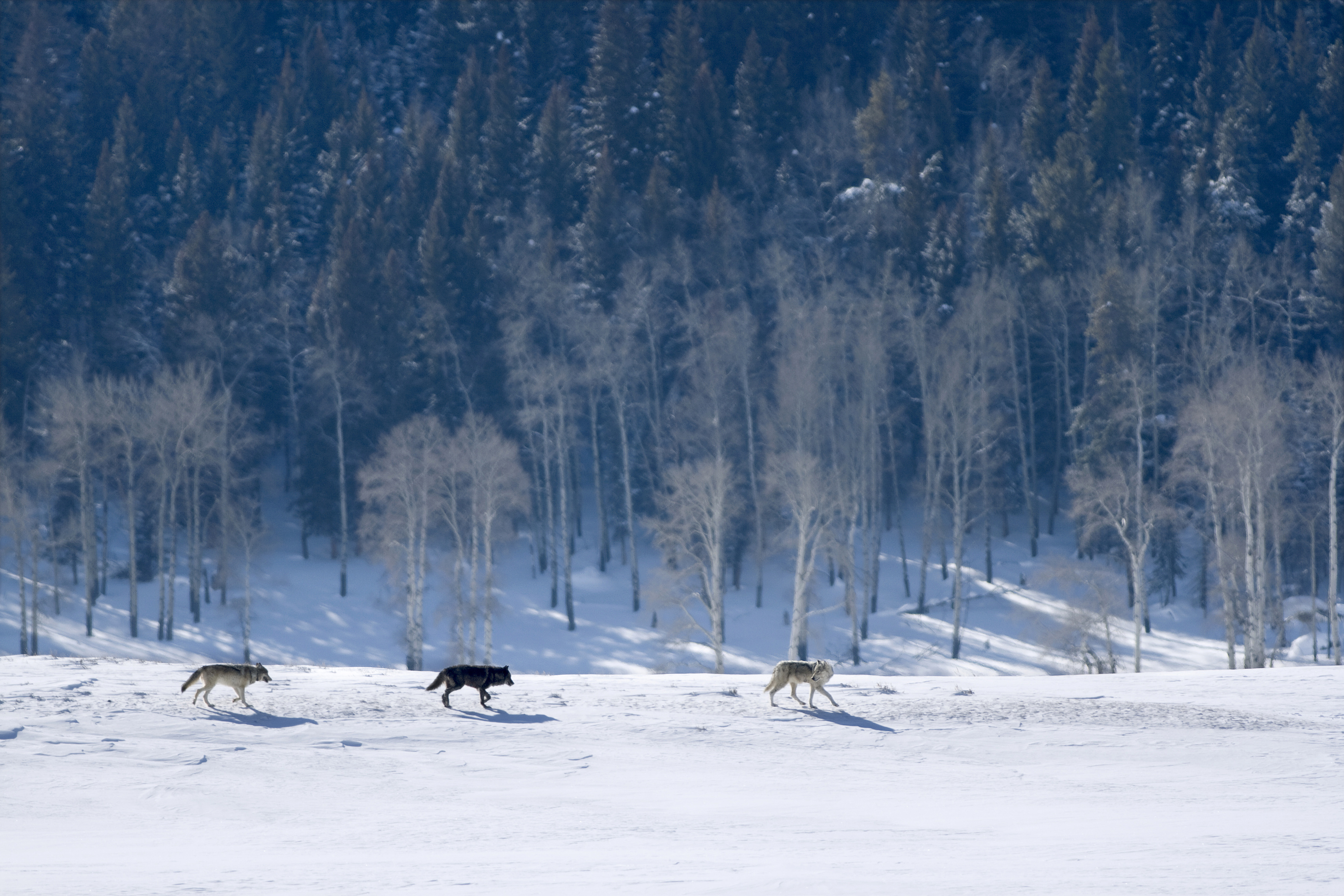
Then comes the showstopper: A handful of wolves scamper over the ridge, gaunt and gangly from the winter and desperate for a big kill, probing the bison herd for any sign of weakness.

Cameras and spotting scopes snap to attention, shutters rapidly clicking as the apex predator’s canines are bared in an attempt to single out a vulnerable cow.
“It’s a special moment, it gets the adrenaline pumping,” says Steven Bahls (BBA76), who was among the wolf watchers last winter.
“My favorite thing about wolves is they’re so highly intelligent in how they organize these hunts. You hear the yipping, the howling. You see the tail signals and noses going in different directions while some come from the sides and some from the back.”
Only 5 to 10 percent of wolf hunts end in a successful kill. The odds are even lower when the prey is large, like buffalo or elk. This hunt, too, ends in retreat after a panicked bison lands a vicious kick, sending one of the wolves whimpering away in pain.
“After that, the alpha called off the hunt,” said Bahls.
“At this point, it’s now a business decision—they realized this maybe wasn’t as easy a prey as initially hoped, and the better path is to regroup and try again later.”
Bahls, the semi-retired president emeritus of Augustana College in Rock Island, Illinois, has a keen eye for business decisions. With an accounting degree from the University of Iowa and a law degree from Northwestern University, he draws natural parallels between behavior in the wild and in the boardroom.
"There's a lesson to be learned there," he says. "There are times in business when you need to back off. You've tried something, it didn't work as planned, and now it's time to regroup and learn before trying again."
Bahls has applied this philosophy to his own professional life. After earning his law degree, he spent six years as a corporate attorney with Frisch, Dudek & Slattery in Milwaukee. But it was during another wilderness adventure that he and his wife, Jane, decided to shift course.

“My wife and I were hiking in the Canadian Rockies and we ran across a couple of law professors from the University of Calgary,” he said. “They were telling us what a great life it was, being a law professor out west and we thought that would be a good fit for us.”
Shortly afterward, Bahls applied for an opening as an assistant law professor at the University of Montana in Missoula and got the job.
He spent the next nine years there, eventually becoming associate dean. Before accepting the position of president at Augustana, he served nine years as dean of Capital Law School in Columbus, Ohio.
One of the best things about Missoula, he said, is its location about halfway between Yellowstone and Glacier National Parks. This allowed the Bahls to spend as much free time as possible hiking, backpacking, and observing wildlife. Even after Steven accepted the presidency at Augustana, they knew they’d return to Missoula someday.
“There is just so much to see and learn from this great big world, and we enjoy going on adventures together,” Jane said.
They’ve tracked the Porcupine Caribou herd migration across arctic Alaska. Survived a walrus trying to clamber into their rubber Zodiac. Laughed at a raft of sea otters cracking clams open with rocks they stash under their armpits.
But it’s wolves that hold a special place in their hearts. Last February’s trip to Yellowstone was a four-day immersion, rising at dawn to join park biologists monitoring the wolf packs for up to six hours each day.
Bahls says wolves have much to teach humans—especially about leadership. It’s a myth, for example, that “might makes right” when the pack chooses an alpha.
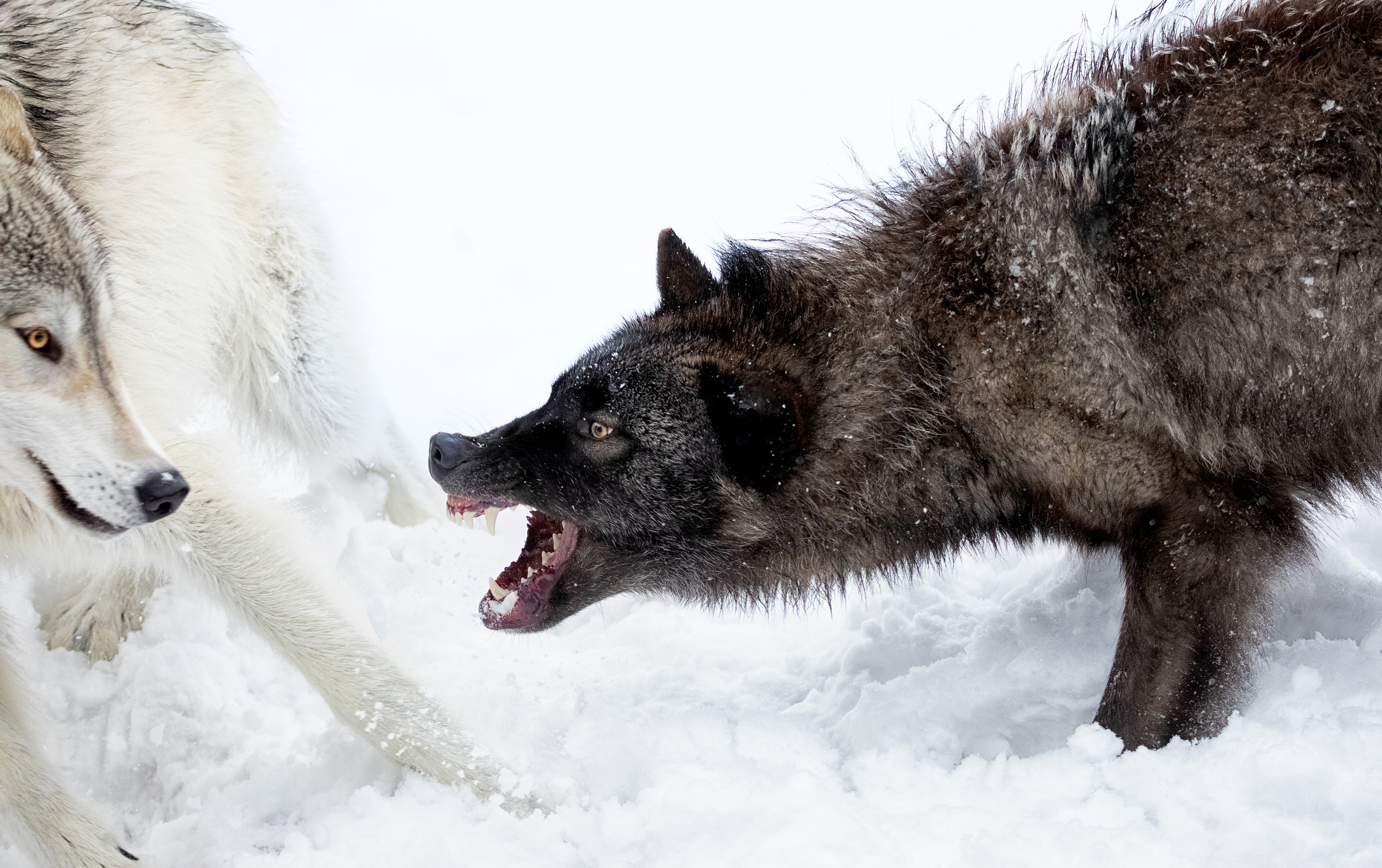
“Alpha male and alpha female positions are earned—and re-earned—every day,” he explains. “They need the trust of the pack and must show wisdom to keep everyone fed during harsh conditions. It’s not just about strength. It’s about wisdom and empathy.

"The idea of a 'lone wolf' is a myth. Lone wolves are not successful. Connected, well-led packs are."
When he’s not photographing wildlife, crystal hunting in Montana with his grandkids, or hiking with Jane, Steven remains professionally active.
He teaches a communications studies course part-time at Augustana and serves as a senior adviser to the Council of Independent Colleges. Jane worked more than 20 years as a magazine freelancer, covering a wide variety of topics in business, law, agriculture, church life, and travel.
These days, you’re most likely to find the couple in or near Yellowstone—Steven estimates he’s visited at least 75 times. “These wildlife moments are some of the best in my life,” he says. “It feels like a privilege—being allowed to enter their world and see it as few people ever do.”

Five facts about Yellowstone's wolf packs
- In the absence of food, wolves will sometimes bring "toys" like antlers and branches to den sites for their pups to distract them from hunger and help them practice for future hunts.
- Wolves were re-introduced to Yellowstone in 1995, some 70 years after their initial eradication. There are currently nine packs, containing around 108 wolves living inside park boundaries.
- A 100-yard minimum distance is required to watch wolves, but park staff often manage viewing opportunities at even greater distances to maintain safety.
- The wolves are monitored by biologists using GPS-enabled tracking collars. Around 30% are fitted with the collars, helping scientists monitor the health and size of packs.
- Yellowstone biologists collect DNA samples from all wolves they handle or find deceased. These genetic profiles help them study how wolves evolve, maintain population health, and relate to one another.
This article appeared in the 2025 issue of Iowa Ledger.