

When Professor Erik Lie began studying executive compensation in the early 2000s, the intention wasn’t to expose corporate wrongdoing—he just wanted to understand how pay structures influence behavior. But while manually reconstructing thousands of executive stock-option grants, he noticed something strange.
“The stock price almost always dropped right before the grant date, then rose sharply afterward,” said Lie, the Amelia Tippie Chair in Finance. “That’s not random.”
That statistical anomaly he noticed would become the spark that ignited one of the biggest corporate scandals of the early 2000s. Lie’s research revealed that many companies were secretly changing the dates of stock options to guarantee instant gains for top executives.
His backdating findings triggered SEC investigations, Pulitzer-prize winning Wall Street Journal coverage, corporate board reforms, and new national reporting rules. In 2007, Time Magazine named him among its 100 most influential people.
"It felt like detective work, but through statistics,” Lie said. “I would uncover a pattern, then journalists and regulators would take it into the real world.”
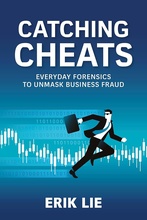
In his career at Tippie, Lie has broadened that forensic–finance approach into a larger mission: using data to hold powerful actors accountable. His new book, "Catching Cheats: Everyday Forensics to Unmask Business Fraud," explores deception across industries such as illegal after-hours trading of mutual funds, the rigging of LIBOR, and other malfeasance. Each case begins the same way: with a data pattern that “just doesn’t look right.”
By exposing fraud and promoting transparency, his research protects everyday investors, safeguards retirement savings, and reinforces public confidence in the institutions that underpin the economy.

For Lie, fighting fraud isn’t only about catching bad actors—it’s about promoting a culture where honesty pays dividends.
“Transparency can be contagious—it builds reputation and lowers costs,” he said. “Companies that disclose more attract cheaper capital."
Yet he knows transparency can fade as quickly as it spreads.
“As detection improves, the cheaters adapt,” he said. “Some use AI and deepfakes; others retreat into opaque areas like private equity or offshore reinsurance. It’s an arms race—but also a race to the darkest corners of the system.”
As the current head of the finance department, Lie works to instill a skeptical mindset in his students and colleagues. He believes that academic research can make society fairer.
“Apathy is dangerous,” he warns. “When society grows numb to misconduct, that’s when the cheaters truly win.”
Deep Dive
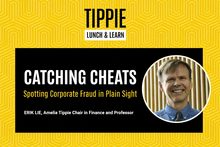
Erik Lie talks "Catching Cheats" in this Tippie Lunch & Learn webinar.
Read more from the Researchers on a Mission series here:
This article appeared in the Spring 2026 edition of Tippie Magazine.