
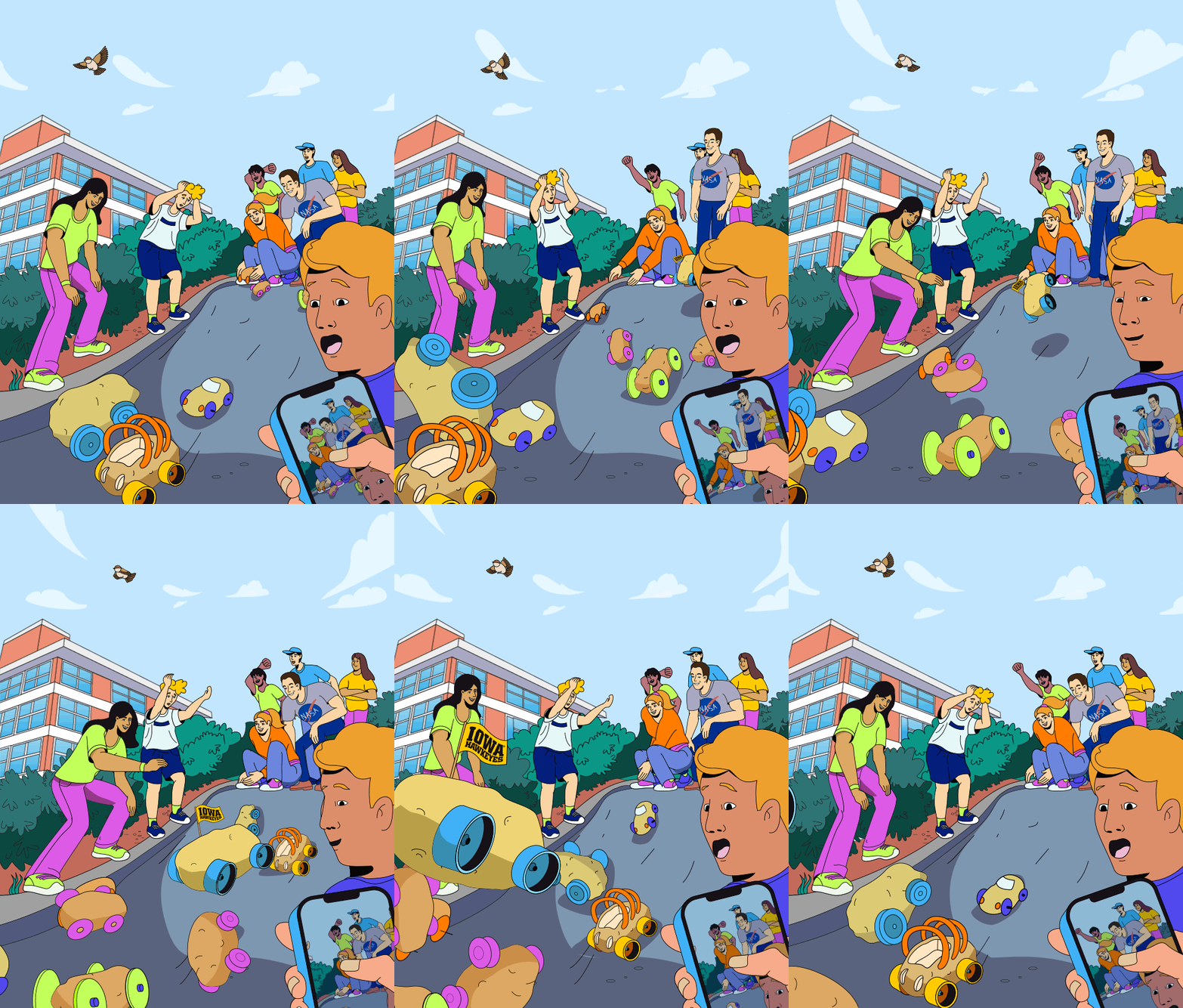
If you're ever on the University of Iowa campus and a potato on wheels zooms past you, know that Professor Daniel Newton is behind it.
Every fall for the last three years, Leading Innovation—a.k.a. Newton's “creativity class”—has headed outdoors for a potato derby, where fun disguises a wealth of lessons.
“I love hearing students’ insights about the elegance of simplicity, the importance of trial runs, thinking creatively rather than sticking with the status quo, and how to manage when the wheels come off—both literally and figuratively,” Newton said.
It’s one thing to rattle off these nuggets of wisdom in class, but it’s another to learn the concepts in real time on the steep hill behind Catlett Residence Hall.
“There’s something about hands-on, even playful activities that seem to propel thinking outside the box,” Newton explained. “It also makes the lessons memorable.”
Newton’s class is required for entrepreneurship majors at Tippie, but he also sees students signing up from marketing, management, and even accounting.
“The class hits on topics like improvising, prototyping, withstanding public scrutiny, being open to ‘aha’ moments, and seeking inspiration from the world around us,” he said. “I’m also trying to bust the myth that there are ‘creative types.’ Everybody’s creative. It just manifests in a lot of different ways. You can be creative making spreadsheets—and there’s a place for that. It’s not just in the arts.”
“This class is a fun environment, and there’s research on the value of positive emotions,” Newton said. “When we’re feeling good, we’re going to be creative.”
He says he hopes students are inspired to build creative environments after they’ve graduated.
Senior Matthew Borozan took the class in 2024. He said, “Having the opportunity to engage in a form of play, get outside the classroom, and do totally unique and ‘out there’ things just opens up a part of your brain that you haven’t used since you were a kid.”
For Borozan, the class also eased his fear of doing silly, goofy things—and failing spectacularly.
“We did not get our potato down the hill,” he said, laughing.
“Learning by doing and failing fast are principles we put into practice,” Newton said.
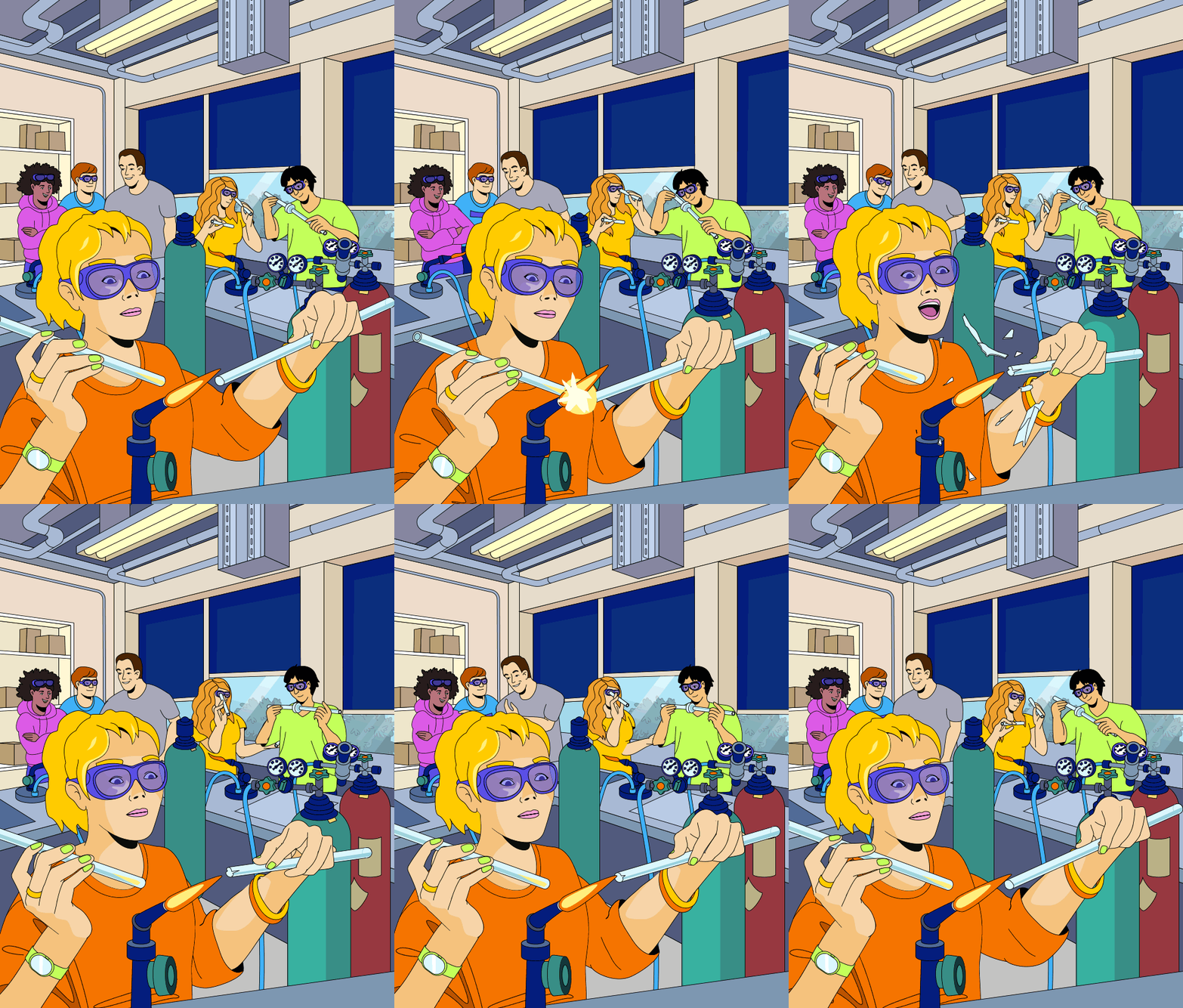
Another way he drives these lessons home is by taking students to the glassblowing lab in the Chemistry Building.
Senior Savanna Kaczynski took the course in 2025 and tried her hand at glassblowing.
“I wanted to be good at it…and I wasn’t,” she said. “Lots of little failures. I snapped a few rods. I tried to blow a bubble and that exploded. I couldn’t even get the burner to light at first. But we were having fun, and the spirit was to persevere and reframe it as an opportunity to continuously improve.”
Newton wants students to use experiences like this to gain resilience and confidence.
“I want them to know that if they come across something they’ve never done before, they can handle it,” Newton said.
In addition to lots of hands-on experimentation, Newton, who holds a Cannon Faculty Scholarship for Teaching Excellence, has made the course research focused.
“I bring in the most cutting-edge papers in management about creativity, and students present on this research and ‘hijack’ the class,” he said. “One student presented on how physical movement promotes creativity, and then he took everybody outside to play basketball to make the point.”
Former students have called it “the opposite of a lecture where you sit back and take notes” and “the most student-centric” and “most impactful” class they’ve ever taken.
“No class was ever the same,” said Kaczynski. “You never really knew what the day would bring.”
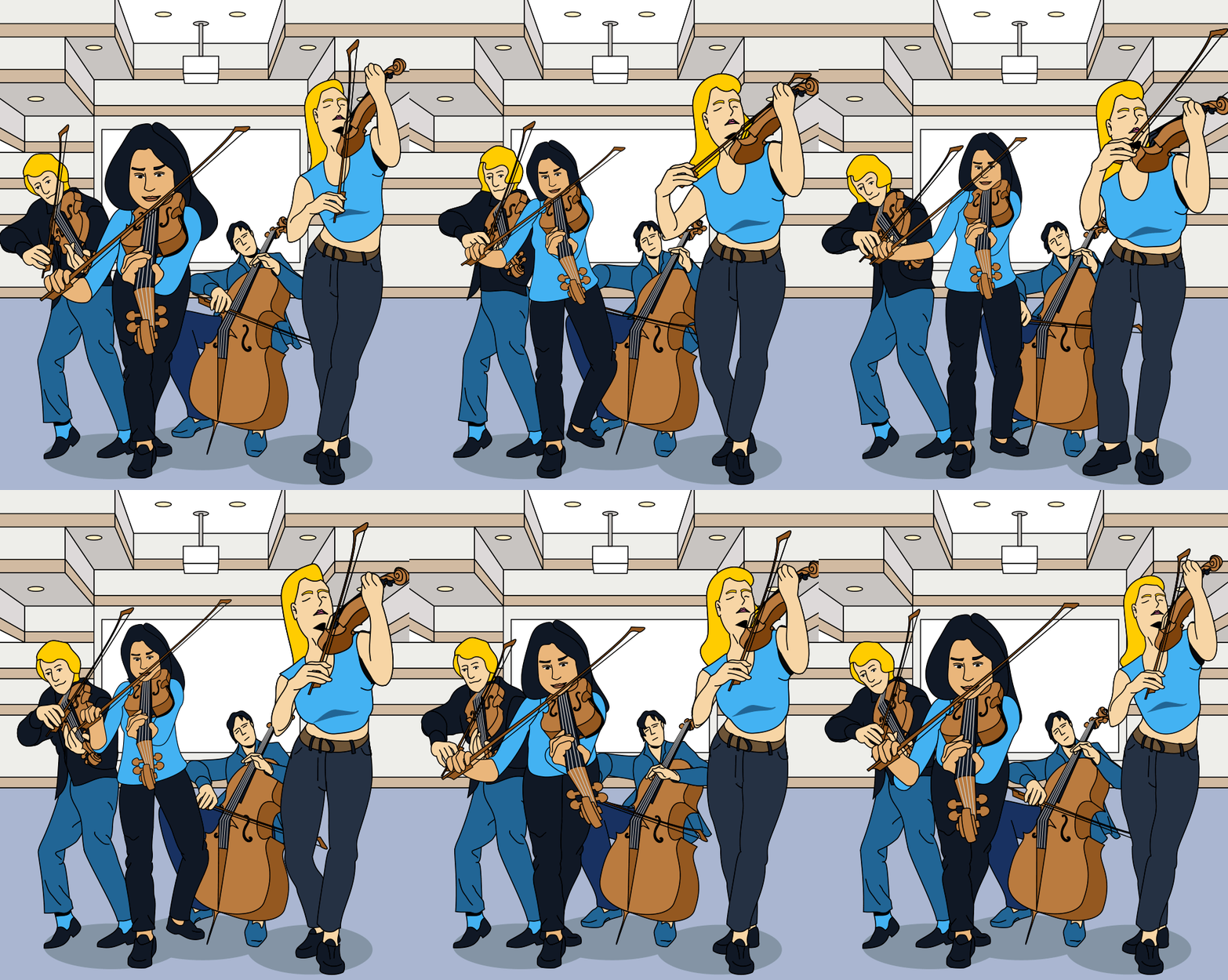
Other activities include attending a string quartet performance, visiting the engineering college’s “makerspace,” working in groups for survival simulations, creating videos with AI about the worst inventions of all time, giving presentations at The Airliner for a change of scenery, designing quantitative studies, and hosting guest speakers.
One guest was Molly Murphy, an entrepreneur and baker from Chicago who spoke to students about the creative process—not just how to turn flour and sugar into edible masterpieces, but also the nitty gritty of Google Analytics and getting paid for blog posts. She did all this while frosting and decorating a cake in front of them.
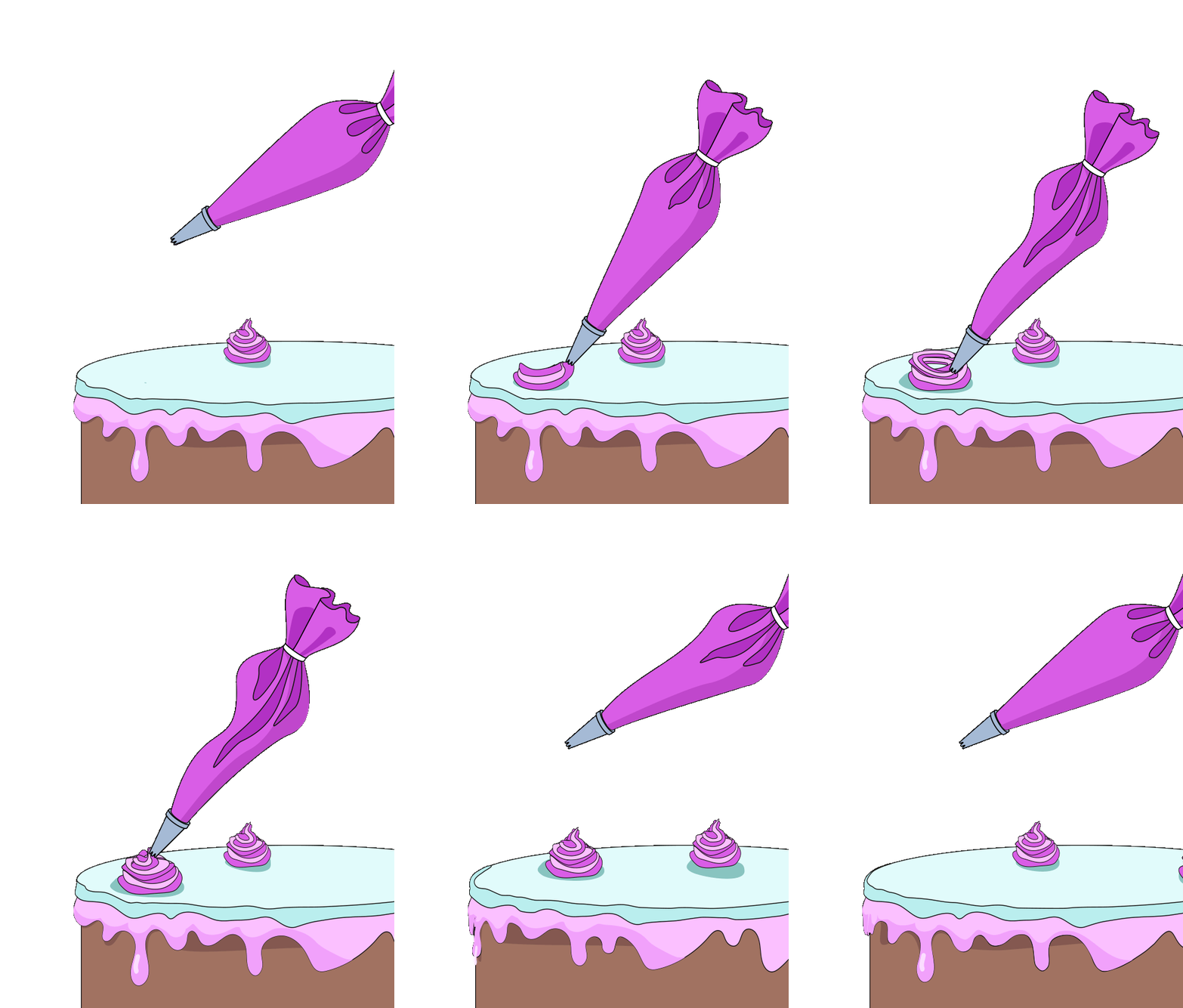
“Having Molly visit helps to show how we don’t turn creativity off, which is good, because especially when things are uncertain or unpredictable, we need people in society who can be flexible, think on the fly, and respond to change,” Newton said. “And students get to eat cake, so that’s fun, too.”
While it all sounds like fun and games, Newton says he has a tough midterm and final essay to be sure students internalize the lessons from class.
Along the way, Newton has learned as well. He reports having incorporated several research-backed ideas to boost creativity—like letting his mind wander, multitasking, and more—into his own life.
“Creativity has made its way into every part of my life. It’s even made me a better researcher,” he said. “I am having such a blast teaching this class.”
DYK?
Professor Newton has a $900,000 NASA grant to study engagement levels when astronauts switch tasks. His findings will inform planning for future long-term voyages to Mars and beyond.
This story is the latest installment in the Innovative Teaching series for Tippie Magazine. The first story was Econ is Everywhere, featuring Associate Professor Alexandra Nica.
This article appeared in the Spring 2026 edition of Tippie Magazine.
Illustrations and animations by Julia Shtogren.