
Jay Sa-Aadu never heard of Iowa while growing up in Accra, Ghana. Even the United States was a far-off, mysterious land.
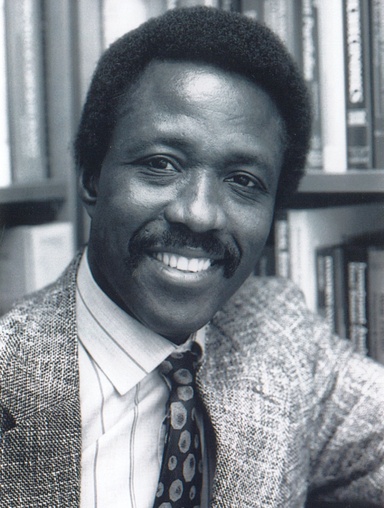
But his father ran an import-export operation that introduced him to the world of business finance at an early age, so he majored in land economics at Ghana’s Kwame Nkrumah University of Science and Technology. He graduated in 1973 and came to the United States to earn his MBA and Ph.D. from the University of Wisconsin, Madison.
His introduction to Iowa followed, joining Tippie’s finance faculty in 1981.
One of his first students was Emerita Professor of Practice Cathy Zaharis (BBA82), who took his real estate class as an undergraduate.
“You could tell he loved teaching and sharing his passion for something he loved,” said Zaharis, whom Sa-Aadu would later bring back to Tippie as a finance faculty member and director of the finance academy in the full-time MBA program.
One of his top goals quickly became to make the department better. It struggled with few resources, especially technology, and lacked strategic direction.
“We were last in the Big Ten, looking up at everyone else,” he said.
Sa-Aadu did not want to work for a low-rated department, so when Dean Gary Fethke appointed him finance department executive officer (DEO) in 1991, they went about improving their corner of the college.
They hired top notch researchers and provided them with resources to do their work. They hired more adjuncts to teach the nuts and bolts of doing business. They built connections to the state’s business community and formed a departmental alumni advisory board, creating more job opportunities for graduates. They expanded student learning opportunities with updated technology and secured funding for numerous centers and institutes, like the Henry Fund, Krause Fund, and Vaughan Institute for Risk Management and Insurance.
Fethke said Sa-Aadu was instrumental in building the finance department through hard work and devotion to the cause.
“Great universities require selfless, committed faculty members who treasure merit and excellence,” Fethke said. “Jay is one of those individuals. He committed enormous effort to his teaching and his successful research agenda. But he was also a program builder and a committed college citizen.”
More leadership positions would come. Associate dean of graduate and professional programs. Interim chair of the economics department. Provider of wise counsel to students and colleagues.
Professor Erik Lie worked closely with Sa-Aadu when he arrived at Tippie in 2004 and quickly came to appreciate the department he helped build.
“He’s happy and kind, and he established a culture of collegiality and respect here, for each other and for everyone in the college,” said Lie.
As the department’s current DEO, Lie said he can always rely on Sa-Aadu for advice.
“He sat in this chair, he knows what it’s like, and he knows how to always get the best out of people,” he said. “I appreciate him and admire him for all that he’s done to put the department on a stable course.”
Lie noted that the finance department has never had a major crisis in the decades since Sa-Aadu was DEO.

Sa-Aadu was associate dean of graduate programs when Sarah Gardial became dean, and she remembers a perpetually happy leader willing to take on any challenge.
“He never walked into my office without a big Cheshire grin on his face, even when he was dealing with a problem,” she said. “He was never upset and he said yes to anything.”
Sa-Aadu said everything he did at Tippie always had the student in mind, whether providing the best teachers and researchers, experiential learning opportunities, or job opportunities.
“It’s always about putting students in the center,” he said. “It’s all about the students.”
One of Sa-Aadu’s pride and joys is the work he did helping to build a modern financial infrastructure in his home country. He returned to Ghana often after moving to the United States not only to visit family but to advise government and business leaders on developing a stock market, an independent central bank, and a municipal bond market. He helped start a business school at Kwame Nkrumah University of Science and Technology, his alma mater, as a resource to produce future knowledgeable advisors and financial leaders.
Today, the Ghana stock market is one of the largest in Africa and the country is one of the continent’s most politically stable democracies, in part because many of his former students now lead the country’s financial institutions.
“I consider what I do here [at Tippie] a drop in the ocean,” Sa-Aadu told The Chronicle of Higher Education in 2011. “When I go there, it’s more like a drop in a cup of tea. You can see the splash.”

“It was important for me to do something to help myself, my family, and my country as a whole,” he said. “I wanted the country to move forward, and I was determined that one day, we’d have a stock market and effective central bank.”
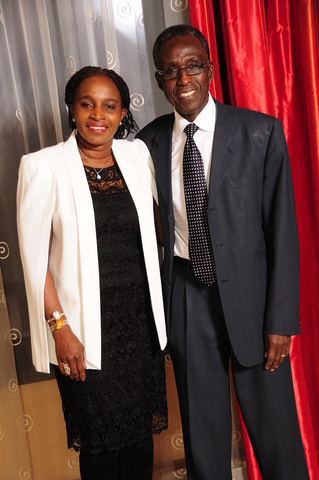
Zaharis said she realized the impact that Sa-Aadu had on his homeland when she met grad students from Ghana and many of them knew who he was.
“He always took advantage of the opportunity to work with them and mentor them,” she said.
Sa-Aadu continued his teaching and research until the age of 76, when he suffered a stroke. Dozens came to his retirement party in November 2025, including his wife, Nana Hawa, and children, Hadiza and Sharif, whom he calls his rock and biggest supporters.
Attendees shared memories of everything he did for them as an instructor, colleague, or friend. Later, he acknowledged he was overwhelmed by the moment.
“I realized how glad I am to have come to Iowa and what I got to contribute,” he said.
“Iowa has been good to me.”
Illustrations by Tavo Montañez.
This article appeared in the 2026 issue of Exchange magazine.