

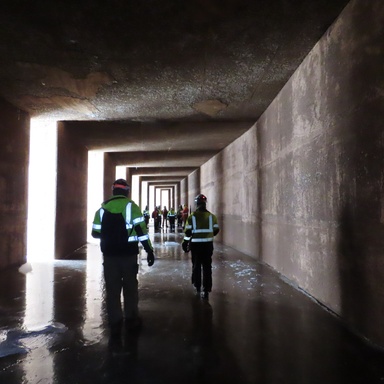
In the dead of winter, beneath the frozen surface of the St. Mary's River in Michigan, Vance Stewart (BBA86) stood at the bottom of any empty lock chamber.
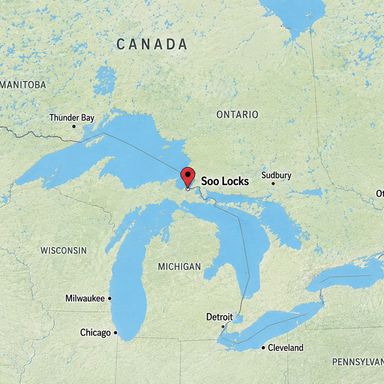
Drained for maintenance, the Soo Locks revealed their full scale—32 feet deep, 1,200 feet long, 110 feet wide. Nearly all iron ore mined in northern Minnesota passes through this narrow gateway between lakes Superior and Huron on its way to steel plants across the Midwest.
For Stewart, the visit was more than a tour. Years earlier, funding for a new lock had appeared as a line in a budget infrastructure. Standing inside the structure, he saw what those numbers represented: protection against a single point of failure in the country’s industrial supply chain and the quiet work required to keep it moving.
Shepherding millions of dollars from spreadsheets to the real world has defined Stewart's career, which began at the University of Iowa.
He became a Hawkeye almost by accident. A college-visit road trip with a high school friend brought him first to Drake, then to Iowa State University.
“My buddy loved Ames, but I didn’t,” Stewart said. “I knew the University of Iowa was a couple hours east, so we decided to check it out.”
The trip came shortly after the Hawkeyes clinched the 1982 Big Ten football title, and the campus felt electric.
“I went home and told my parents I was moving to Iowa City,” he said. “There weren’t many Minnesota kids at Iowa then—I was kind of an outlier.”
Stewart majored in finance and joined Army ROTC.
“It was the early Reagan era, and there was optimism in the country,” he said. “The Army was rebuilding after Vietnam, and there was a great ROTC cadre at Iowa. I didn’t have long-term career aspirations at 19, but I found my tribe. I was interested in the mission and the opportunities.”
After his junior year, Stewart committed as a second lieutenant. His first assignment took him to Korea, working with a battalion responsible for demolitions and mobility. Germany followed, and supervisors soon noticed his skill with numbers.
After a successful budgeting assignment, an Army personnel manager encouraged him to move to Washington DC. At the Pentagon, Stewart worked in the Army’s military personnel budget, overseeing pay and allowances for roughly one million active, reserve, and National Guard soldiers.
“I also built forecasts and the budget, presented to Congress, got it approved, and sent funds back out for execution,” Stewart said. “In corporate terms, the closest analogy is financial planning and analysis.”
Unlike corporate finance, the stakes were not quarterly earnings.
During the early years of the war on terror, the Army expanded significantly to meet demands in Afghanistan and Iraq. Stewart knew that signing bonuses and pay structures could influence enlistment decisions.
“Being part of the team that determined and justified that funding—knowing young men and women would be signing contracts during a time of war—was a tremendous responsibility,” he said.
Government budgeting also meant navigating political transitions.
“With every change in administration, you pause after the election,” Stewart said. “The incoming team reviews what’s in motion, lays in priorities, and you rebuild the budget around the new direction.”
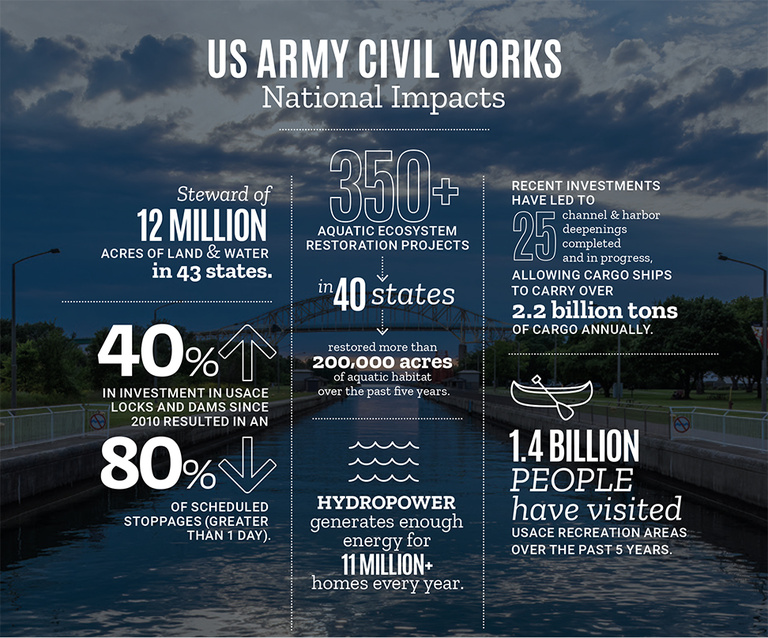
After retiring from uniformed service in 2013 as a colonel, Stewart returned as a civilian financial manager overseeing the U.S. Army Corps of Engineers’ $6 billion civil works budget. The Corps manages navigation, flood risk reduction, ecosystem restoration, hydropower, disaster response, water supply, and recreation.
The scope and impact of the work is massive. Inland navigation on the Mississippi and Missouri rivers alone supports billions in commerce.
“In government, stewardship is fundamental,” he said. “We make resourcing decisions based on effectiveness and readiness—not profitability. The stakes can be national security and lives.”
That long commitment to public service was recognized in fall 2025 when retired Colonel Stewart received a University of Iowa Hawkeye Distinguished Veteran Award, which honors alumni who have demonstrated exceptional service to the nation and their communities. He was recognized during a ceremony at the Iowa Memorial Union and introduced at halftime of Iowa’s football game against Oregon at Kinnick Stadium, which he proudly attended with his family.
“It was very honoring and humbling," he said.
Soo Locks photos courtesy of the U.S. Army Corps of Engineers, Detroit District.
This article appeared in the 2026 issue of Exchange magazine.